

When $5.2 Billion Isn't Really About a Building
A philanthropic evaluator's lens on the difference between a capital investment & a coherent one

There’s a moment in every significant capital investment when the number gets announced and everyone responds to the wrong thing. $5.2 billion lands and the conversation immediately goes to scale. The size of the campus. The beds. The square footage. The construction timeline. All of it real, all of it measurable, and almost none of it the actual story.
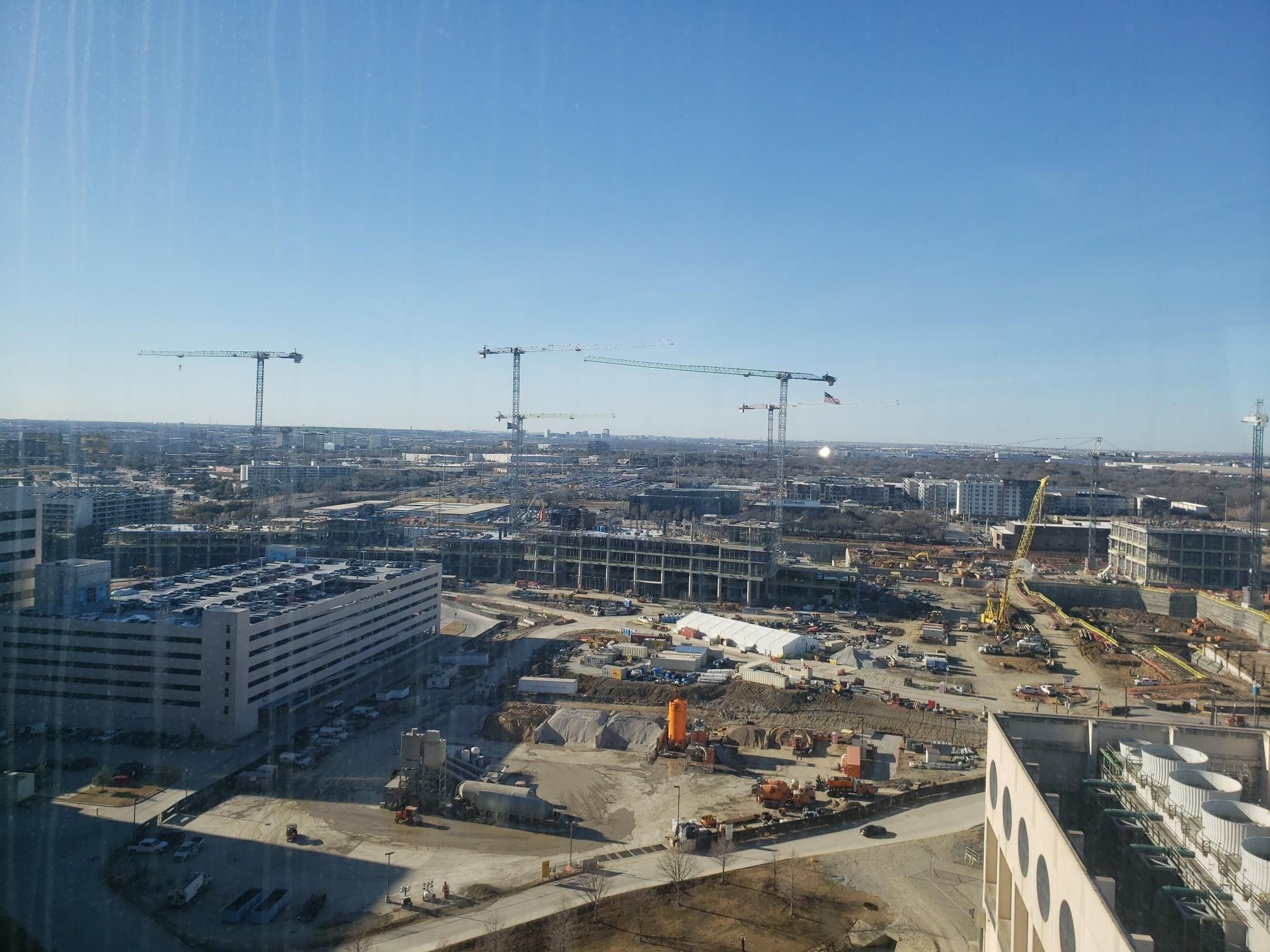
I was in the room recently when the leaders behind Children’s Health Foundation shared what that investment is actually building in Dallas. What struck me, as both an evaluator and someone who has spent two decades directing philanthropic capital, wasn’t the number. It was the logic underneath it.
They aren’t funding a building. They’re funding the system’s capacity to meet demand that doesn’t fully exist yet, but will. That distinction is the whole thing.
The difference between construction and capacity
Most infrastructure investment in fast-growing regions follows the same pattern: wait until the need is undeniable, respond to the pressure, and build to current demand. The result is perpetual catch-up. The region grows. The infrastructure lags. The gap between what the population needs and what exists becomes the permanent condition.
What the Children’s Health Foundation is doing is structurally different. They’re building to a population curve that hasn’t fully arrived, designing capacity for the Dallas-Fort Worth metro that a fast-growing region will require, not the one it currently has.
This isn’t a subtle distinction. It’s the difference between reactive infrastructure and anticipatory infrastructure. Between funding what is and funding what the evidence says is coming.
The honest evaluator’s question is whether the investment logic actually holds. Does the capital deployment match the stated intention? Does building this campus now, at this scale, actually create the conditions for the outcome being claimed?
In this case, the answer is yes, and here’s why: the population data supports it. The region’s growth trajectory is documented. The pediatric care gap is measurable. The decision to build ahead of the demand curve rather than behind it has a rigorous logical foundation. This isn’t faith in a vision. It’s a capital decision anchored in demographic evidence and structural analysis.
The longer arc
There’s a harder question underneath the construction question. Not just whether the building gets built, but whether the capacity it creates actually produces the outcomes the investment intends over time.
Does a regional pediatric care system built to scale with population growth actually improve health outcomes for children in fast-growing communities? Does anticipatory infrastructure investment change what families in those communities can access? Does the logic chain hold from capital deployment through construction to capacity to access to outcome?
These are second-order questions. They can’t be answered at the ribbon cutting. They require the long arc, the willingness to follow an investment through its full logical chain rather than stopping at the output that’s easiest to count.
Most evaluations stop at the building. How many beds? How many patients served? How many procedures were performed? Those numbers are real, and they matter. But they don’t answer the question a serious funder should be asking: does what we built actually create the conditions for what we intended to change?
Why this matters beyond one hospital system
The Children’s Health investment is exceptional in scale. The underlying principle is not. Every significant philanthropic capital deployment faces the same structural question: are we funding the thing, or are we funding what the thing is supposed to produce? Are we building the building or building the capacity? Are we counting outputs, or are we honestly examining whether those outputs create the conditions for the outcomes we care about?
Fast-growing regions either build for the future they can see coming or spend decades closing the gap. The same logic applies to every domain where philanthropic capital meets community need: education, housing, workforce development, and health infrastructure.
The investment that thinks one order deeper than the immediate output is the one that actually changes the trajectory.
Worth funding. Worth examining honestly, before, during, and long after the ribbon is cut.
Rhonda Williams, Ph.D., is an evaluator and philanthropic practitioner examining how capital is deployed toward, or away from, the outcomes it intends to produce.